Counselling for Burnout,
Grief & Life Transitions
"Compassionate, trauma-informed counselling support in Cardiff and online."
Counselling
Counselling for Grief, Burnout and Life Transitions
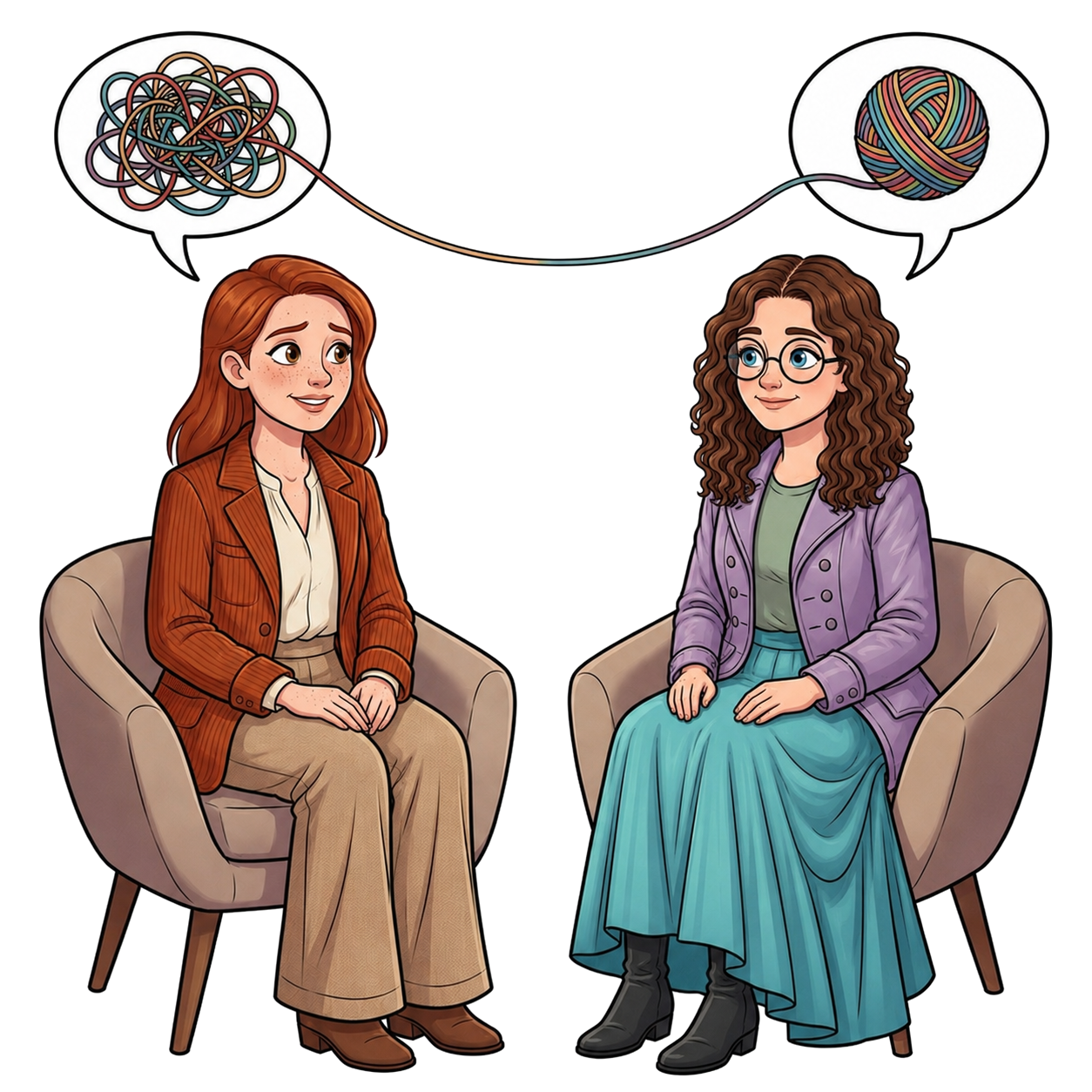
Counselling is a calm, compassionate space to process what has changed, what feels heavy and what needs care.
I offer integrative counselling for people navigating grief, loss, burnout, anxiety, emotional overwhelm and significant life transitions.
Counselling may help if:
- You are grieving a loss or navigating a change you did not choose.
- You feel emotionally exhausted.
- You feel overwhelmed, anxious or constantly on edge.
- You have lost interest in things that once brought you joy.
- You are struggling with confidence, self-worth or feeling like yourself.
- You are navigating a major life transition or identity shift.
- You have been carrying too much for too long, and something now needs to change.
What Counselling Brings
Counselling provides you with a safe space to unpack what you've been carrying, where you can talk things through and it doesn't matter if you think you're making sense or not yet.
Over time, many people find they feel calmer, clearer and less alone in what they are navigating.
Counselling can help you better understand yourself, process difficult experiences, strengthen boundaries and reconnect with parts of yourself that may have been pushed aside in survival mode.
This work is not about fixing you. It is about creating enough safety, reflection and support for change to become possible.
What To Expect
How I work
My counselling approach is integrative, trauma-informed, relational and compassionate.
I work at a pace that respects your emotional safety, nervous system capacity and lived experience. Sessions are collaborative and shaped around what feels most supportive and useful for you.
I draw from a range of approaches including:
- Person-Centred Therapy
- Existential Therapy
- Cognitive Behavioural Therapy (CBT)
- Acceptance and Commitment Therapy (ACT)
- Motivational Interviewing
- Neuro-Linguistic Programming (NLP)
- Somatic and nervous-system-aware practices
This allows us to work both reflectively and practically, supporting insight, emotional processing, behavioural change, boundary-setting and nervous system regulation where appropriate.
Areas of support:
- Grief and loss.
- Burnout and emotional exhaustion.
- Anxiety and overwhelm.
- Workplace stress and unhealthy work dynamics.
- Confidence and self-worth.
- Co-dependency and over-functioning.
- Adult children of emotionally immature or narcissistic parents.
- Relationship patterns and boundaries.
- Identity transitions and life change.
- Difficult life experiences and emotional recovery.
Particular experience:
I have particular experience supporting people navigating emotionally demanding family dynamics, including adult children of emotionally immature or narcissistic parents, codependent relationship patterns and the long-term effects of over-functioning and people-pleasing.
I also work extensively with workplace stress, burnout, toxic work environments and the emotional impact of carrying high levels of responsibility for long periods of time.
Counselling: Frequently Asked Questions
How do I know if therapy is right for me?
If you're feeling anxious, overwhelmed, or stuck in cycles of panic or overthinking, therapy can help.
You do not have to wait for a crisis. Many of my clients are coping on the surface but struggling internally.
You're allowed to want more than just getting by. If something feels off, I’d encourage you to reach out.
What if I am nervous about starting therapy?
That is completely normal. Many people feel unsure about opening up at first.
I will meet you at your pace, offering a calm and supportive space where you do not need to have everything figured out before you begin.
A free consultation offers a gentle first step with no pressure to continue.
What happens in the free clarity call?
The clarity call is a relaxed conversation of up to 30 minutes with no pressure or commitment.
We will briefly discuss what has brought you to counselling, any questions you have about the process and whether working together feels like the right fit.
The call is not designed for deep therapeutic work or detailed exploration of presenting issues.
How many sessions will I need?
This depends on what you are working through, and to an extent the work you have done up until now.
Some clients find 6 to 10 sessions helpful for a specific issue, some need fewer, while others prefer longer-term support for deeper work.
We will review progress regularly and work at a pace that feels supportive and sustainable for you. I typical review cycle is once evey 3 sessions to map progress, and if you want us to refine the way we work, just say in-session on that day, you don't have to hold it in an wait for that 3rd review session to come around.
What should I expect from counselling sessions?
Sessions last up to 60 minutes and are held online via Zoom, or by phone where agreed or where technology becomes a barrier.
If we are meeting via Zoom, I will send you a secure session link in advance.
I will always attend sessions from a safe, private and uninterrupted space, and I require clients to do the same so the work can remain confidential, focused and emotionally safe.
Driving during sessions is not permissible for either of us, and audio or video recording of sessions is not permitted.
You do not need to arrive with everything clearly explained or fully understood. Part of the process is making sense of things together over time.
Do you offer exercises or reflective work between sessions?
Sometimes, where it feels supportive and appropriate.
This may include reflective prompts, journalling suggestions, grounding practices, nervous system support tools or practical exercises connected to what we are exploring together.
Any work suggested between sessions is designed to support progress, deepen reflection and help you integrate what we are discussing into everyday life.
The intention is not to create pressure or additional workload, but to support meaningful and sustainable movement between sessions.
What if I struggle to do things between sessions?
That may be useful information in itself.
If something feels difficult to begin, complete or return to, we may explore together what is getting in the way.
Sometimes the barrier is practical. Sometimes it is emotional. Sometimes it reflects deeper patterns around pressure, avoidance, exhaustion, perfectionism or capacity.
The intention is not judgement or performance, but understanding what may need more support, attention or exploration within the therapeutic work.
Can counselling help with burnout and work-related stress?
Yes. I support many professionals and founders who feel emotionally exhausted, disconnected, overwhelmed or unable to switch off from responsibility and pressure.
What is your counselling approach?
As an integrative therapist, I draw from Person-Centred Therapy, existential approaches, motivational interviewing, CBT, NLP and ACT.
I combine reflective exploration with practical tools to help clients manage pressure, reconnect with themselves, strengthen boundaries and navigate change more sustainably.
I may also incorporate somatic breathing or movement-based practices where appropriate to support nervous system regulation and emotional processing.
Is online counselling as effective as face-to-face counselling?
Yes. Research suggests that online counselling can be just as effective as face-to-face work for many issues, including burnout, anxiety, overwhelm, stress and emotional support.
Many clients also find online sessions more accessible, comfortable and easier to fit around work, family life or energy levels.
Sessions are held confidentially via Zoom, allowing you to access support from home anywhere within the UK.
However, online work is not always appropriate for every situation. Where there are significant safety, safeguarding or crisis concerns, alternative support arrangements may be more suitable.
Session information
Counselling is available online on weekday evenings from 4:30pm.
Availability is limited.
Investment
Counselling Sessions are £75 for 60 minutes.
While many counsellors work to a 50-minute therapeutic hour, I offer a full 60-minute session, allowing a little more time to settle into the work and bring the session to a thoughtful close.
Appointments are available in the late afternoon and evening, making it easier to access therapy around work and other daytime commitments.
Where appropriate, counselling is planned in agreed blocks of sessions to support continuity and provide a clear opportunity to review progress together.
Payment is required by bank transfer at least 48 hours before each scheduled appointment. Appointments not paid for by this time may be released.
At least 48 hours' notice is required if you need to cancel or rearrange an appointment..
Get in Touch
Please get in touch to say about the area(s) you'd like to work on.